
A paper bag can look right in a photograph and still be wrong for the product. The base may be too narrow for a gift box. A bottle set may pull at the handle holes. A bouquet may fit through the opening but sit awkwardly once it is inside.
That is why choosing custom paper bags should start with what customers will carry. Size, paper, handles and reinforcement all need to work together. Once those details are settled, the artwork has a much better foundation.
One bag style, several different uses
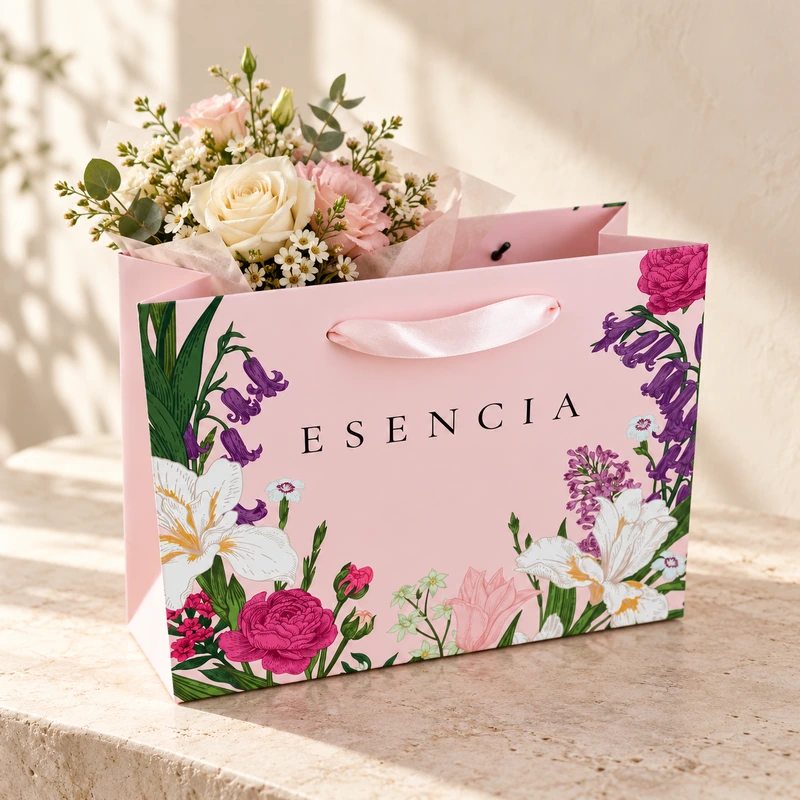
Consider a pink paper bag with floral printing and soft ribbon handles. With flowers inside, it feels like a natural choice for a florist. Change the contents to a skincare set, a scarf or a small gift box, and the same style can work just as well.
The print sets the mood, but the structure determines what the bag can actually hold.
| Use | What to check before ordering |
|---|---|
| Flowers and small arrangements | Base width, stability and protection from moisture |
| Clothing and accessories | Space for folded garments, tissue and any inner box |
| Cosmetics and perfume | Combined product weight and support beneath boxed bottles |
| Jewelry and small gifts | Proportion between the bag and the presentation box |
| Weddings and events | Consistent sizing, easy packing and room for several items |
| Candles and home fragrance | Base reinforcement and handle attachment under the actual load |
A floral design does not have to mean a flower-only bag. It can also suit a spring collection, a Mother's Day gift range or a boutique with botanical branding. For year-round use, a simpler version of the same artwork may be easier to keep in stock.
Get the dimensions right before discussing finishes
For a paper shopping bag, depth is easy to overlook. A front panel can look generously sized while the side gusset is too narrow for the box going inside.
Start with the largest item you expect to pack, including its existing packaging. Add room for tissue and for staff to insert and remove it comfortably. If customers often buy two items together, check that combination too.
For example, 300 mm wide × 120 mm deep × 250 mm high is less ambiguous than a three-number size with no labels. Suppliers may use different dimension orders.
For an initial fit check, a plain folded mock-up is useful. Put the real product inside and lift it by the handles. You will learn more from that simple exercise than from comparing two similar digital visuals.
Choose paper for the artwork and the load
White coated paper is worth considering when the design includes detailed botanical illustrations, pale backgrounds or several printed colors. Brown kraft gives a different result: its natural color becomes part of the design, so pale pinks and delicate color transitions will not look the same as they do on white paper.
Textured paper can suit a restrained logo-led design, although the selected surface should be checked against the intended print and finishing processes.
Paper weight matters, but GSM alone does not tell you how much a finished bag can carry. Bag size, paper properties, glue joints, the folded top and reinforcement all affect performance. For boxed cosmetics, candles or several gifts packed together, ask the supplier to recommend the whole construction rather than choosing paper thickness in isolation.
Ribbon handles: check the attachment as well as the color
Ribbon handles suit gift packaging because they add a soft visual detail and can coordinate with tissue, box wraps or a seasonal print. Satin and grosgrain offer different textures; the choice depends on the look you want.
The attachment deserves just as much attention. Ask how the handles are secured and whether reinforcement is included around the handle area. Confirm the handle length on a sample, too. Very short loops can make a full bag awkward to carry.
Paper handles are another option for everyday retail packaging or a design intended to reduce mixed-material components. Neither appearance nor handle material alone establishes a safe carrying weight. Test the finished sample with the actual load.
Keep the artwork clear when the bag is folded
The floral example works visually because the illustration frames an open central area. The brand name has room to be read.
The same approach can work for custom printed paper bags in other categories. Leave a clear space for the main logo, then use the edges or side panels for supporting artwork. A website address can sit discreetly on a side panel or near the bottom.
Review the artwork on the production dieline. Check the handle openings, top fold, side folds and glue area. A detail that looks balanced on a flat rectangle may disappear into a gusset or cross a crease on the finished bag. If color consistency matters across bags and boxes, compare physical samples.
For flowers, plan for moisture separately
A paper gift bag can present a bouquet beautifully, but it should not be treated as a water container.
Any wet floral foam, water source or damp stems need suitable containment before they go inside. A surface finish should not be assumed to make the entire bag waterproof, particularly around seams, edges and the base.
Also check stability. A tall arrangement in a narrow bag may tip even when the paper is strong enough to carry it. Test the complete arrangement as it will be handed to the customer.
What changes the price of custom paper bags?
Dimensions, paper choice, printing, handles, finishes, reinforcement and order quantity all influence the quotation. Freight is another part of the comparison, especially for overseas orders.
If a quote is above budget, start with the structure. A slightly different size may fit the product while using material more efficiently. You can also compare a simpler finish or a stock handle color before changing the main artwork.
Ask suppliers to quote the same specification. Otherwise, a lower unit price may reflect a different paper, missing reinforcement or a smaller bag.
Be specific about recycling claims
A bag being made mainly from paper does not automatically establish that the complete finished item is recyclable everywhere. Film layers, non-paper handles, decorations and local collection rules can affect the answer.
If recyclability is a priority, discuss the complete construction before approving the design. Ask which components need to be removed and what evidence supports any on-pack claim. Avoid broad promises such as “100% eco-friendly.”
Questions to settle before production
Can one size cover an entire product range?
Sometimes. Test your smallest item, largest item and most common multi-item purchase. A bag sized only for the largest order may look oversized for everyday sales.
Can a paper bag replace a shipping box?
A retail gift bag is generally intended for handover and carrying. Products sent by courier normally need suitable outer shipping protection.
What should I send for a quotation?
Send the product or inner-box dimensions, packed weight, quantity, preferred paper and handle style, artwork reference, destination and required delivery date. State whether you need tissue or other matching packaging.
Should I approve a physical sample?
For a new size or construction, a physical sample helps confirm fit, color, handle comfort and carrying performance before the full order is produced.
Planning your own paper bag?
The most useful starting point is the product itself. Decide how it should sit inside the bag, how it will be carried and what customers should see at handover. Then build the paper specification and artwork around that.
We can discuss custom paper bags for flowers, clothing, cosmetics and gifts. Send your product dimensions, quantity and a design reference through our contact page so we can review a suitable size, material and handle option with you.